Fresh Seafood in Koh Samui
The freshest seafood restaurants and dining experiences on the island — from whole fish to shellfish and Thai-style preparations.

In This Guide
Fresh Seafood in Koh Samui
Koh Samui sits in the Gulf of Thailand, surrounded by waters that have sustained fishing communities for generations. The island's seafood culture is deeply rooted — local fishing boats go out each night and return with catch that is sold at the morning markets and finds its way onto restaurant tables within hours. This proximity from sea to plate is what makes seafood dining in Koh Samui fundamentally different from ordering fish in a landlocked city.
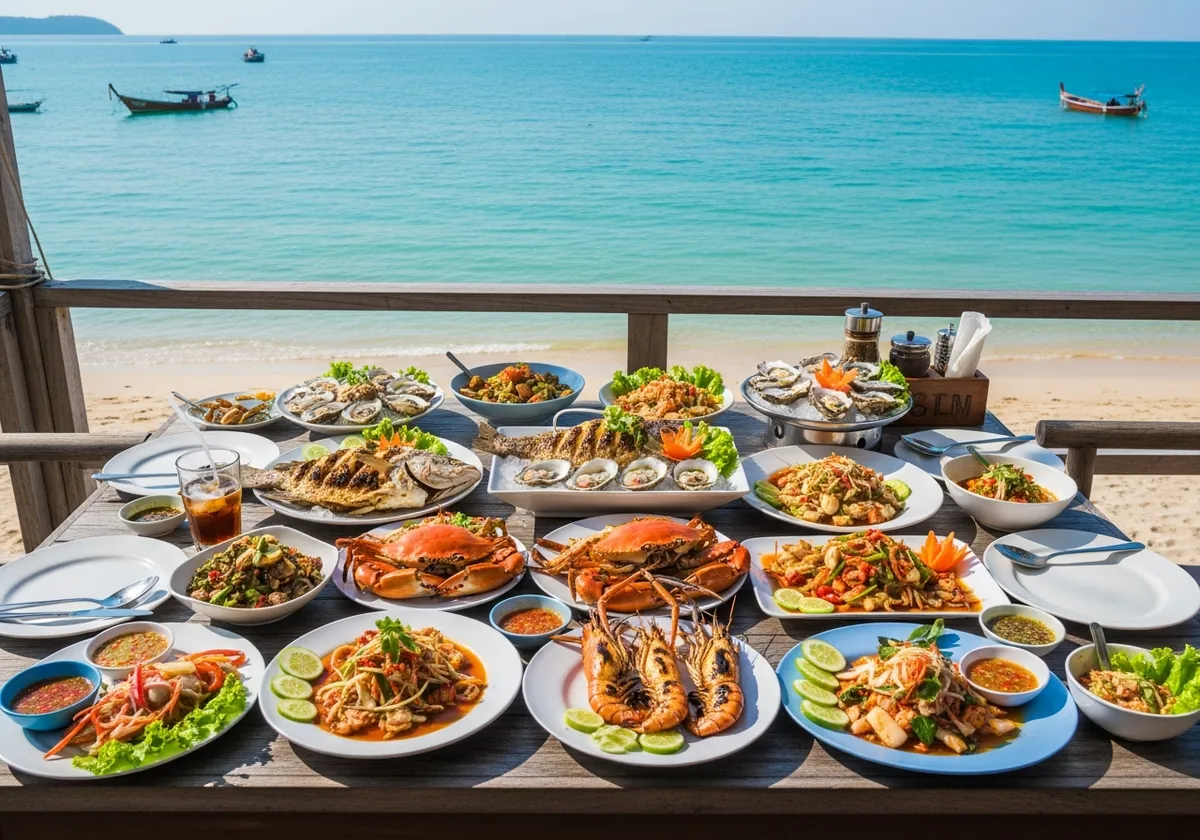
The variety available is considerable: tiger prawns (kung tiger), red snapper (pla kapong daeng), sea bass (pla kapong khao), barramundi, grouper, squid, cuttlefish, blue crab, mussels, clams, and scallops are all commonly available depending on season and market supply. Most established beachfront restaurants on Choeng Mon Beach work with suppliers who deliver fresh catch daily — the quality is directly linked to the reliability of this relationship.
Thai cooking methods do exceptional things with fresh seafood. Whole fish steamed with lime, garlic, and chilli (pla neung manao) is perhaps the definitive Thai seafood dish — the flesh stays moist and absorbs the bright, acidic sauce beautifully. Grilled prawns in the shell with a dipping sauce of fish sauce, lime, and garlic are another staple. Crab prepared pad pong curry style (pu pad pong karee) — with egg, yellow curry paste, and spring onion — is a dish that converts anyone who has only ever eaten crab boiled or steamed.
What to Order
For a table of two, a good starting point is a shared order of spring rolls or tom yum goong (prawn and lemongrass soup) followed by a whole fish (typically 400–800 baht depending on size and species) and a vegetable dish. This provides enough variety to experience the kitchen's range without over-ordering. For a table of four, add a seafood curry, grilled prawns, and a stir-fry to the whole fish and you have a proper feast.
When selecting a fish, the display of fresh catch on ice that many Choeng Mon restaurants maintain near the entrance allows you to choose the actual fish rather than order from a menu description. Choosing the whole fish yourself and specifying how you want it prepared — steamed, grilled, deep-fried, or in a clay pot — is the most authentic way to order and produces the best results.
Spice tolerance is worth clarifying before ordering. Thai seafood dishes can range from mild (most preparations of steamed fish) to extremely hot (some chilli-based whole fish dishes and certain salads). Simply asking the server 'pet nit noi' (a little spicy) or 'mai pet' (not spicy) will calibrate the kitchen accordingly. Most Choeng Mon restaurants are experienced with international guests and will calibrate without issue.
Freshness and Seasonality
The freshest seafood at Choeng Mon restaurants is always whatever is most abundant in the current season. Tiger prawns are available year-round but are particularly good in the cooler months (November to February) when the water is clearer and the catch is larger. Certain fish varieties are more seasonal — asking your server what has arrived fresh that day, rather than ordering from the printed menu alone, often produces the best results.
One indicator of a seafood restaurant's quality is the handling of the display ice. Fresh fish on ice should look firm-fleshed, bright-eyed, and not smell strongly. Fish that has been sitting in direct sun or on ice that is visibly old is not a good sign. Most established beachfront restaurants on Choeng Mon replace their display catch daily, but if something does not look right, it is perfectly acceptable to ask for an alternative.
Crab and shellfish availability varies considerably. Blue crab from the Gulf of Thailand is available through much of the year but is more reliably available in the cooler months when fishing activity is higher. Large tiger prawns (kung yai) are available year-round but the largest specimens appear in high season when supplies are at their peak. For the widest selection, visiting between November and February maximises your options.
Practical Tips for Ordering Seafood
Discuss pricing before ordering whole fish and live seafood, as these are often priced by weight rather than as fixed menu items. Asking 'tao rai?' (how much?) about a specific fish before ordering prevents surprises on the bill. Most restaurants will tell you the approximate price per hundred grams and the estimated weight of the fish you have selected — this is standard practice, not unusual to ask.
If you are unfamiliar with Thai seafood preparation methods, the best strategy is to tell your server you want 'the best of what is fresh today, prepared in the chef's recommended way.' This hands the decision to people who know the kitchen and the day's catch best. Most servers at established Choeng Mon restaurants are genuinely happy to guide the order.
Bone awareness matters with whole fish. Thai-style whole fish preparations leave the bone in — this is both for flavour (the meat cooks better around the bone) and for practicality (removing the bones is easier at table than in the kitchen). Using chopsticks or a fork to work the flesh away from the spine is the technique; the fish flakes easily when properly cooked and the meat lifts cleanly from the bones.
Frequently Asked Questions
Is the seafood at Choeng Mon restaurants genuinely fresh?
At established beachfront restaurants like The Blue Spice, yes. The supply chain from local markets to table is short — most fresh fish and prawns at Choeng Mon restaurants are sourced daily from the Koh Samui morning market and from direct relationships with local fishing suppliers. The display ice at the restaurant entrance is a practical indicator: if the catch looks fresh and firm, the kitchen's standards are high.
What is the most popular seafood dish in Koh Samui?
Whole steamed fish with lime, garlic, and chilli (pla neung manao) is probably the single most ordered dish at Thai beachfront seafood restaurants. It represents the simplest expression of what Thai coastal cooking does best — the freshness of the fish carries the dish, and the sauce enhances rather than dominates. Grilled tiger prawns with a garlic butter sauce are a close second.
How much does fresh seafood cost at a beachfront restaurant?
Pricing varies by species and size. Whole fish typically costs 400–1,200 baht depending on size and variety. Tiger prawns are often sold by weight: expect 400–600 baht per portion of four to six large prawns. A full seafood meal for two including drinks typically runs 1,200–2,500 baht. Crab and lobster, when available, are priced at a premium — always ask before ordering.
Can I eat seafood if I have a shellfish allergy?
Thai kitchens use shrimp paste (kapi) and fish sauce (nam pla) in many dishes, including those that do not obviously contain shellfish. These are deeply embedded in Thai cooking and removing them fundamentally changes the dish. If you have a severe shellfish or crustacean allergy, it is important to communicate this clearly to the kitchen — say 'allergy, no shrimp, no shellfish, very serious' to ensure the kitchen understands the severity. Dishes prepared with only whole fish (no sauces) and vegetables are the safest option.
When is the best season for seafood in Koh Samui?
November through February (the dry season and peak tourist season) is generally the best time for fresh seafood availability and variety. The fishing fleet is most active in the calmer seas of the cool season, and the widest range of species is available at market. The wet season (May–October) can affect fishing activity during rough weather, which may reduce variety — but the core staples (tiger prawns, sea bass, squid) are available year-round.
Related Reading